Aug 5 2014

 –  Wednesday,  August 6,  CIP Review Committee will once more meet at 5:30 p.m. in the small City Council Conference Room to discuss possible projects eligible for Measure WW Funding.  –

~~ Capital Improvement Projects (CIP) ~~

The CIP Review Committee plays an important role in recommending to the City Council many of Piedmont’s expensive capital improvement projects.

A long laundry list of projects ranging from curtains to safety matters have been discussed.

At previous meetings, interest focused on needed improvements particularly to Hampton Field, where water and sand has harmed the tennis courts presenting dangers and the outfield is rendered useless during wet weather. The large cost of Hampton rehabilitation would likely require phasing of the work.

Funds derived from the East Bay Regional Park District’s voter approved WW Bond measure can be used by Piedmont for specific projects. (Read about the project list.)  Piedmont’s entitlement is $507,000.

The CIP Review Committee meeting is open to the public.  However, The Brown Act meeting notice requirement appears to have been breached as time, date and location of the meeting was announced but timely notice of the meeting agenda was not distributed to aid citizens interested in participating in the meeting.  Prior CIP meetings have been held in locations outside of general public view. None of the Committee’s meetings have been broadcast or recorded.

The majority of the members on the CIP Review Committee are composed of those from the Park Commission or Beautification Foundation. There is no active representation from the Planning Commission or the Budget Advisory and Financial Planning Committee.

Following an interview process, four members of the seven member CIP Review Committee were appointed by the City Council.  They are: John Cooper (Chair)Ryan Gilbert (member of the Public Safety Committee), Bobbe Stehr (former member of the Planning Commission and member of the Piedmont Beautification Foundation) and Jamie Totsubo (member of the Park Commission).

Piedmont Garden Club’s Piedmont Beautification Foundation appointee:  Michelle Winchester (President of the Piedmont Beautification Foundation)

Park Commission representative: Sue Herrick (Chair of the Park Commission and member of the Piedmont Beautification Foundation)

Recreation Commission representative: Nick Levinson (Chair of the Recreation Commission)

City Council liaison observer: Vice Mayor Jeff  Wieler alternate: Councilmember Teddy King 

Staff to the CIP Review Committee are:

 Chester Nakahara (W) 420-3061 & Mark Feldkamp (W) 420-3064


Aug 5 2014

– Where does it all go?  What should be recycled?  What should be composted? – 

League of Women Voters View Recycling and Compost Operations

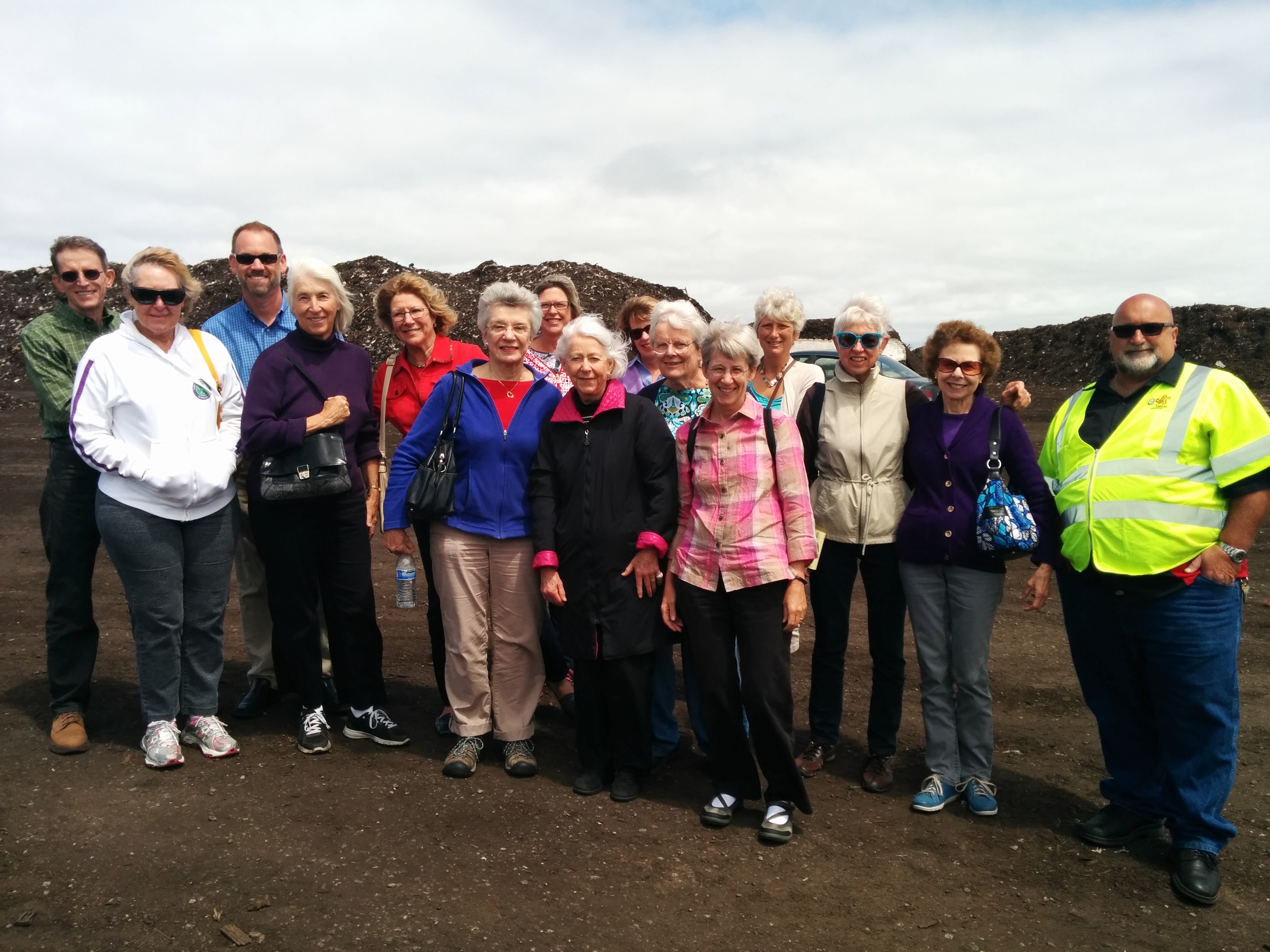
On a recent tour of Republic Services’ recycling and compost operations in the city of Richmond, members of the Piedmont League of Women Voters got a close-up look at the massive and complex business of sorting, storing and transporting our discarded cans, bottles and paper and composting our food and garden waste. The group also learned first-hand what should and should not go in recycling and green-waste bins.

Peter Nuti, a 30-year Republic Services employee and currently Municipal Relations and Contract Manager, led the tour, patiently answering dozens of questions. Republic Services acquired Piedmont’s former contracted waste collection firm, Richmond Sanitary Services, in 2001 and has had a waste collection contract with Piedmont since 2001.

The company, headquartered in Phoenix, is the second largest waste collection firm in the U.S. First on the tour was a cavernous, high-ceiling, aluminum warehouse, where all curbside recycling trucks unload their daily collections. The loads are metered and transferred to a conveyer belt that screens and successively drops out garbage, paper, bottles and cans. Cardboard and non-recyclables are pulled out by hand. Larger plastic containers, those labeled PET #1 and #2, go to a different sorter and ultimately are sent to a processor to be converted into a raw material. The plastic is shredded, washed and made into products, such as carpet fibers. The final separator screens and breaks up glass, and a “waterfall” sucks up the smallest pieces of debris. Mountains of paper are stacked in the warehouse by forklift operators, packed onto pallets for transport to the port of Oakland and from there most likely shipped to Asia to be remade into new paper products.

According to Peter Nuti, there are strong markets for newspapers, cardboard and PET #1 and #2 plastics. “We have to close the loop,” he said, “by buying recycled products and products with less packaging.”

From the warehouse, Mike Davenport, President, Davenport Securities whose company provides security for both Republic Services’ operational sites, drove League members to the composting area, located high above the Bay, atop a 356-acre, capped landfill. Surrounded by 2-story hills of maturing compost, Nuti explained the process of transforming food and green waste into reusable compost. Through various stages, the mountains of waste are separated and ground into small pieces of similar size and texture.

In one critical stage, pieces of plastic, the bane of compost, are separated out by hand. Wood products, such as plywood and wood pallets, are ground into chips for erosion control products or shipped to co-generation electric plants farther north for fuel. During the 90-day composting process, the material is monitored daily to ensure it is not overheating and tested periodically for contaminates such as pesticides, chemicals, or salt. The final compost product is sold wholesale by the cubic yard to wineries, farmers, and the general public ($12 to $18 per cubic yard). The compost dregs that contain plastic and cannot be sold are used as cover at Republic Services’ Keller Canyon Landfill in Pittsburg.

Republic Services produces its own electricity from methane gas released by garbage in the closed landfill and uses reclaimed water collected during the rainy season and wastewater from Contra Costa County Waste Water District The company is working on a new system to collect “industrial organic waste” (food waste) from restaurants and grocery stores to compost.

Asked about the economics and environmental costs of recycling, Nuti acknowledged that recycling processes do require more energy, water and labor than burying waste in the ground. “But, he said, “Recycling paper saves a lot of trees; recycling aluminum, for example, saves 90 percent of the energy required to produce aluminum from bauxite. And composting enables us to recover and utilize the nutrients from the green/food waste.

Furthermore,” he said, “with the high cost of buying, permitting and operating a landfill, it’s important to us to recycle everything we possibly can.” The view from the compost facility looks out on the barren hills of the vast Richmond landfill created by garbage collected from the 1940s until September 2006.

Recycling and Green Waste Tips from Republic Services:

• The less paper in green waste, the better for composting.

• Some paper plates and utensils that are labeled “compostable” or “biodegradable” are not what they claim and not worth buying. Better to purchase old-fashioned paper plates.

• Badly soiled paper plates, pizza boxes and other such paper products can go in the green waste bin. If they are relatively clean, they should go in the blue recycling bin.

• Not all compost pail liner bags are biodegradable, as claimed. Use green “Bio Bags” (available at Piedmont Grocery, Berkeley Bowl) newspaper or a paper bag for pail liners.

No need to rinse cans and bottles before placing them in the recycling bin. Put plastic bottle caps back on the bottles.

Milk cartons and ice cream cartons have interior plastic linings and are not compostable. They should go in the blue bin.

• Better to buy milk in plastic containers that can be recycled instead of cartons.

Juice pouches are not recyclable. Do not buy them!

• Large, plastic containers, such as for yogurt, are easier to recycle than small ones.

• Combine all junk mail and shredded paper into a paper bag for recycling. No need to shred paper for privacy purposes.

Plastic bags should be combined, “bag in bag in bag,” and tightly knotted before putting in recycling bin.

• Used aluminum foil should be balled into larger balls and put in recycling bin.

Do not put auto parts, garden hoses, or barbecues in the recycling bin! (Yes, people do!)

Think big! Combine like items together into larger packages to recycle.

And purchase larger sizes to discourage production of small sizes. Since manufacturers track the type of containers you buy, “Vote with your dollar.”

League members with Republic Services rep., Peter Nuti (far right)

League members and Republic Services staff

Information provided by the Piedmont League of Women Voters

Emphasis added.
Aug 2 2014

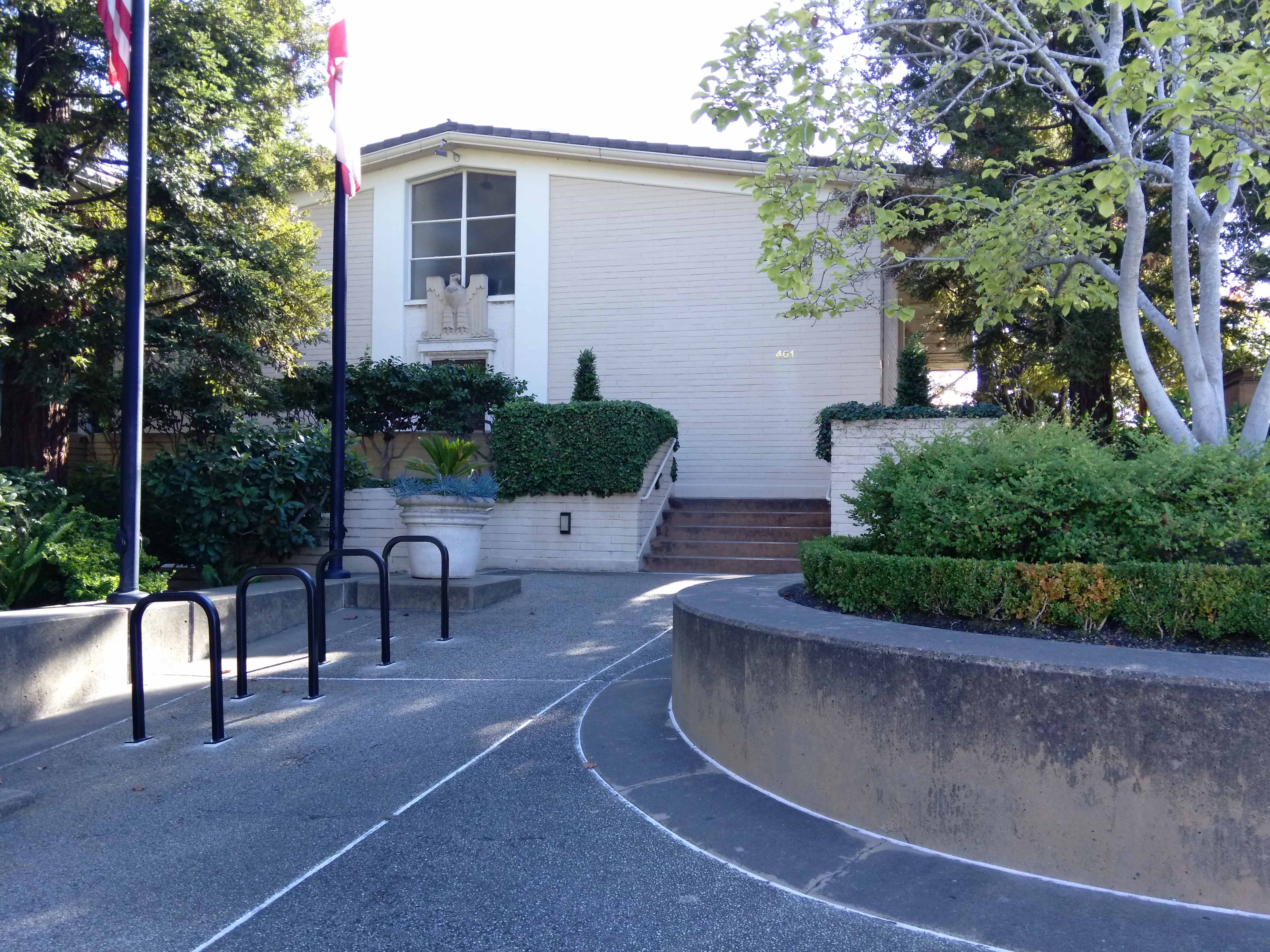
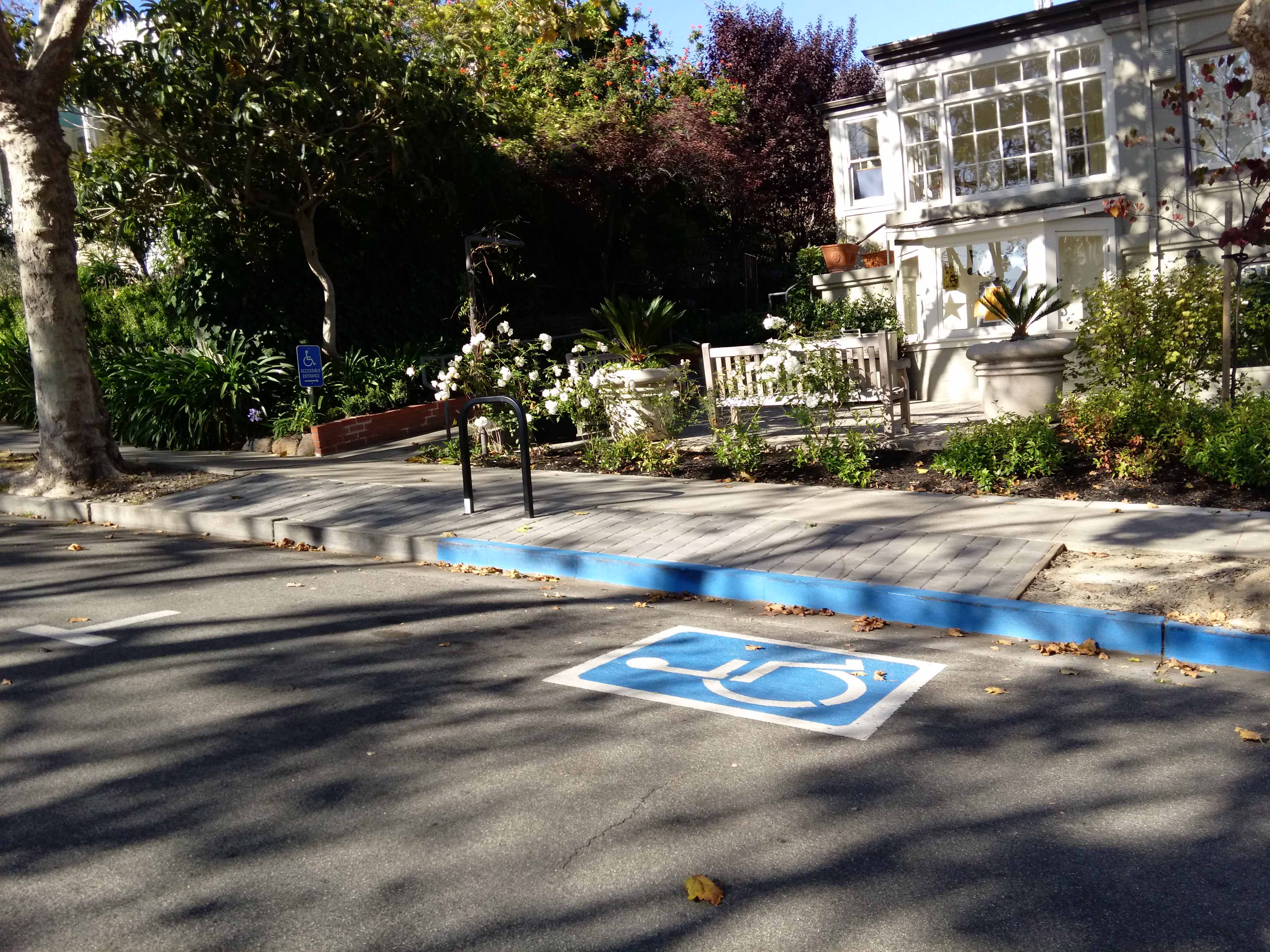
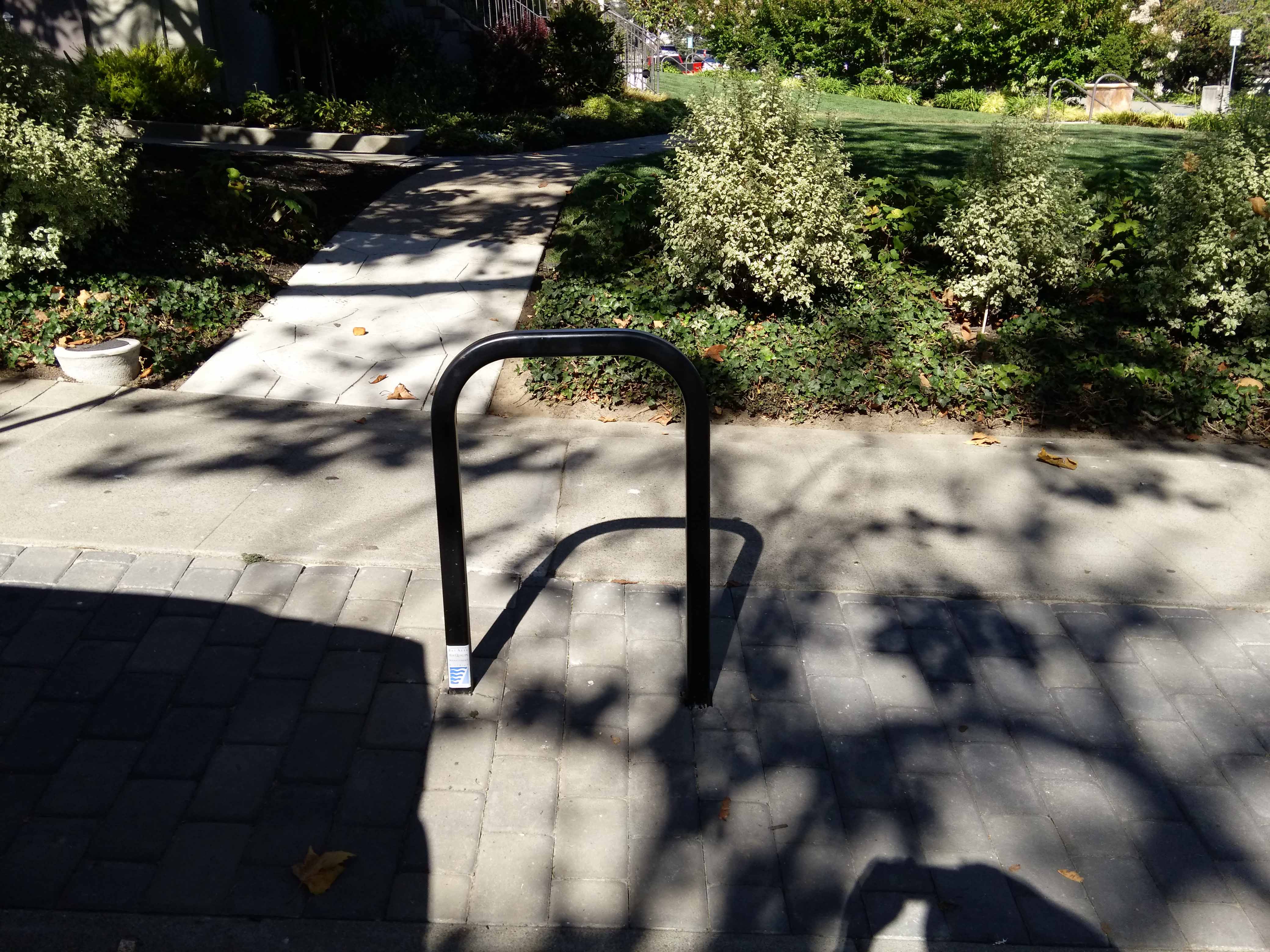
The City has installed 29 bike ranks near major activity centers in the Civic Center, including Piedmont Park tot lot, tennis courts, the Community Hall, Police Station, Veterans Hall, and the Center for the Arts. The project was funded by the Bay Area Air Quality Management District and is intended to encourage biking by Piedmonters. (Read the Civic Center Bike Rack  proposal.)


New bike racks at Veterans Hall

New bike racks at Veterans Hall


New bike rack at side entrance to Center for the Arts

New bike rack at side entrance to Center for the Arts


Chosen Bike Rack Design

Chosen Bike Rack Design

Jul 20 2014

– No environmental studies and little public input – 

With few questions by policy makers on short and long term impacts of housing increases in Piedmont, Piedmont’s Housing Element will likely become known to most homeowners when a neighbor develops an additional housing unit.

The City Council will consider the Housing Element Draft at their meeting on Monday, July 21, City Hall, Council Chambers starting at 7:30 p.m.  The meeting will be broadcast.  Cities are required to adopt Housing Elements to cover the period 2015-2023 by January 31, 2015.

Piedmont’s draft Housing Element is based on adding secondary units (apartments) within existing homes or allowing a second house to be build on properties in the single family residential zone.

Piedmont’s planning staff and consultant have performed no studies per the California Environmental Quality Act (CEQA)  to assess the impacts of increased housing on schools, public services, police, fire, parks, emergency, or recreational facilities.  CEQA is specifically required under State law.  Piedmont intends to approve a “Negative Declaration” for the CEQA requirement without the initial step of actual environmental studies.

Every 8 to 10 years the State comes out with new housing need projections which are divided up throughout the State by region. Some communities have no objection to the housing increases as developers and land owners are eager and ready to develop property. Piedmont has for a century kept inappropriate development at bay due to the City Charter and requirement of voter approval prior to zoning changes.  The result has been a well established, well maintained, viable city.

Piedmont is significantly constrained by the lack of available land and high property values.

The State’s current housing increase round will end on December 31, 2014, yet Piedmont has already exceeded its quota, approving 44 new units when its quota was 40 units. In addition, more applications for new dwelling units have been received by the City this year, so the excess could increase. For the State’s next round of housing increases for 2015 – 2023, Piedmont is required to provide the opportunity for 60 new housing units.

Piedmont has not only complied with the spirit and letter of the law, but has taken significant steps to increase housing units.

Piedmont’s origin was based on keeping Piedmont a single family residential area. This origin is reflected not only in Piedmont’s voter approved City Charter, but in the zoning laws controlling buildings and land use in Piedmont.

The State has preempted cities’ zoning laws by pressing for additional housing in every city. Being landlocked and built-out, is insufficient to relieve a city, such as Piedmont, from the demands of more and more housing particularly very low and low income housing. In an attempt to balance income levels within cities, perhaps for social engineering, Piedmont is being pressed to increase housing for very low and low income units.

Piedmont is noteworthy for its longevity as a city, its numerous historic homes, its economic viability, and quality of life.  The State law states that housing is to be maintained rather than eliminated, yet as the character of Piedmont changes due to enforced requirements from the State, will the city be able to continue the current quality of life?

The planning staff, Planning Commission, and City Council have accepted the State and regional goals.  Developers and public interest organizations have legally challenged cities that did not establish a pathway for increased housing units especially for very low  and low income individuals.

Despite declining populations in Piedmont and Oakland since 2000, Piedmont, responding to State demands, continues on its drive to increase housing units. On July 14, the Piedmont Planning Commission readily recommended to the Piedmont City Council a draft Housing Element to be forwarded to the State Department of Housing and Community Development (DHCD) staff as Piedmont’s working draft for preliminary review and comments. In the previous round, the draft Housing Element was modified to conform to DHCD staff suggestions.

Raising Piedmont’s profile with DHCD, Planning Director, Kate Black, and Piedmont outside consultant, Barry Miller, treated DHCD staff to a tour of  Piedmont.  Did the tour include any of the City’s many empty housing units? (The 2010 census recorded 123 unoccupied housing units in Piedmont and 6,718 in neighboring Oakland.)

Considering the danger posed by vacant housing units correlated with increased crime rates, Oakland and other cities have a program of demolition of vacant housing with federal funds. In March, 2014, the U.S. Treasury announced new funding of $30 million for housing demolition to avoid neighborhoods with vacancies becoming blighted.  Burglaries, arson, and drug-dealing are a few of the crimes associated with vacant housing.

Few comments on the draft Housing Element have come from Piedmont residents.

Several people attended the presentations on the Housing Element Planning Commission “work sessions”.  The “Town Hall style” meeting held in the Police Emergency Operations Center was attended by approximately 2 dozen residents most of whom had received personal letters from the Planning Department because they either resided in or owned a second unit.  No letters were specifically sent to property owners adjacent to or living near a second unit, who might have expressed pleasure or concerns.  The “Town Hall” meeting was not broadcast and the comments were not made available.

Unlike communities that can expand into undeveloped land, Piedmont is completely landlocked, surrounded by Oakland, with no room to expand.  Additionally, Piedmont’s very economic viability is established on its desirability as a place to purchase a home.  Piedmont has its own schools, police and fire departments and public services.  As more and more properties in Piedmont are subdivided or turned into duplexes per the State decrees, property values and willingness of voters to support extraordinarily high taxes comes into question.

Piedmonters, in general, favor providing housing for very low income individuals and others, however, some have expressed their desire to have this done in a manner that does not erode the character and stability of the City’s housing stock.

When the old PG&E building below and adjacent to the Oakland Avenue Bridge was sold for housing development, many thought this was an opportunity to address some regional housing goals.  Piedmont, however, did not take advantage of this opportunity.  The old PG&E site has some of the best access to Piedmont’s very limited public transportation bus routes.

The U.S. Department of Housing and Urban Development recommends siting low income housing near available jobs, public transportation education, social services, and counseling. Piedmont is poorly served by public transportation and lacks social services.

Following are some questions posed:

Will Piedmont eventually become a city of multiple units, renters, and transient residents? Who will pay for the schools or will they be merged by the State with surrounding school districts?  Will property values continue to grow?   Will those desiring a single family residential area go elsewhere? Will City government and the School District need to grow to provide services found in other communities, such as social services?

There have been no long term assessments of services costs and the general impact of increased housing units in Piedmont.

The 2011 Housing Element created an exception to single family Zone A minimum lot size requirements to enable lot splitting. The current draft Housing Element identifies more than 10 properties in Zones A & E (Estate Zone) that could be split in order to add a second house to an existing lot.

Read the City Administrator’s report and the draft Housing Element. 

~~~~~~~~~~~~~~~~~~~~~~

Comments may be communicated to the City Council:

Margaret Fujioka, Mayormfujioka@ci.piedmont.ca.us(510) 463-7821

Jeff Wieler, Vice Mayorjwieler@ci.piedmont.ca.us(510) 428-1648

Teddy Gray Kingtking@ci.piedmont.ca.us(510) 450-0890

Robert McBain, rmcbain@ci.piedmont.ca.us,(510) 547-0597

Tim Roodtrood@ci.piedmont.ca.us,   (510) 239-7663
Jul 18 2014

Did you know that artificial grass (turf) is considered HARDSCAPE in Piedmont and thus does not count as part of the 30% uncovered ground required for each lot?

Every lot is only allowed to have 70% hardscape: structures, brick, cement, and  artificial TURF are all considered hardscape. 30% of the lot must remain uncovered by hardscape.

Given the draught conditions, my husband and I have refused to water our front lawn.  Those of you who know our house, will attest to the brown and barren ground in the front of our house. We decided to install artificial turf. (Not an inexpensive choice but something we wanted as we like the ability to sit on the front lawn and we aren’t gardeners and thus a rock garden etc. was not something we would keep up.)

But then, we learned that we cannot use artificial turf, as we would not meet the 30/70 requirement.

By the way, artificial turf has very good drainage:  there are drainage holes every 4″ on the turf and the turf is laid over 4″ of crushed granite and sand.  Drainage is not an issue.

I attended the July 14 Planning Commission meeting and urged the Commissioners to enter the world of drought and rethink the law that classifies artificial grass as hardscape.  To my surprise (and pleasure) the Commissioners immediately agreed that the issue needs to be looked at and they have directed staff to write a report to the Commission and to place the issue on the agenda for discussion next month: August 11.

Please join me, as I urge the Planning Commission to change allowable options for us to address the water shortage and still maintain a verdant city.

Robin Flagg, Piedmont Resident

Editors’ Note:  The opinions expressed are those of the author and not necessarily those of the Piedmont Civic Association.
Jul 16 2014

On Tuesday, July 15  the California Water Resources Control Board approved mandatory restrictions on water use in urban areas, including Piedmont, with fines ranging up to $500/day.  If also approved by the State Office of Administrative Law, any public employee with law enforcement authority can issue the tickets.

The following water use will be prohibited:

Read more here: http://www.sacbee.com/2014/07/15/6559158/california-faces-mandatory-
water.html#storylink=cpy
  • Run-off from landscape watering onto adjacent property, sidewalks or streets.
  • Washing sidewalks and driveways with drinking water. (Recycled water is permitted.)
  • Using a hose to wash a vehicle unless the hose has a shut-off nozzle.
  • Using drinking water in an ornamental fountain unless the water is recirculated.
Read more here: http://www.sacbee.com/2014/07/15/6559158/california-faces-mandatory-water.html#storylink=cpy

The restrictions will go into effect as soon as they are approved by the State Office of Administrative Law. They will remain in effect for nine months.

While agriculture uses 75% of the state’s water, agriculture is exempted. Also exempted is the power-washing of sidewalks, streets and buildings.

Each water district is charged with implementing mandatory water use restrictions and adopting a sliding scale for the new state water restriction fines. Up to this point the East Bay Municipal Utility District (EBMUD) has requested only voluntary reduction of water use because the agency is in a less dire water supply situation than other California water providers due to its efforts to plan for long-term water supplies.

Meanwhile, the State Legislature is trying to draft a new water bond. (Read about the challenge in the Sacramento Bee.)

Jul 13 2014

Based on little public knowledge or input, the Planning Commission will consider: reducing parking requirements, reducing building fees for second units, requests for all current housing units to be rented, how to extend the time span on rent controlled units, lack of studies evaluating impacts of additional units to infrastructure such as roadways, parks, schools, and public services, forgiveness of taxes on low income units, subdivision of lots, and more.

On Monday, July 14, 2014 at 5:00 p.m. in the City Hall Council Chambers, 120 Vista Avenue,  the Planning Commission will hold a public hearing and discussion concerning the City’s Update to the Housing Element of the General Plan. 

With few citizens, often none, attending or providing input at the various Planning Commission Housing Element “workshops” and about 2 dozen at a “Town Hall type meeting,” combined with little discussion by the Planning Commissioners, the staff and consultant’s proposed changes to Piedmont’s Housing Element are steadily moving forward to review and approval by the City Council and the State Department of Housing and Community Development staff.

– Considerations is being given to: Second unit apartments added to single family homes, greater housing density, very low income housing, affordable housing, market rate housing, and mechanisms to satisfy the State push for more varied housing units in Piedmont. –

The draft Housing Element can be viewed here.  A copy is also available in the Public Works Department at City Hall.

The City Council is expected to consider the draft Housing Element and the Planning Commission’s recommendations at the July 21, 2014 Council meeting, 7:30 p.m. in the Council Chambers.

Both the July 14 Planning Commission meeting and July 21 City Council meeting are open to the public and will be broadcast.

You can watch the meetings on KCOM, cable 20 or by logging on to the city’s website at www.ci.piedmont.ca.us: on the right hand side of the homepage under the “City Council” heading, click on the “Online Video” link, then scroll down under the “Sections on this Page” heading, click on the the Planning Commission or City Council link, click on the “Video”or “In Progress” link, and scroll down to the date and agenda item and start watching!

Email comments to kblack@ci.piedmont.ca.us, send them via US mail to Planning Commission, c/o Kate Black, 120 Vista Avenue, Piedmont, CA 94611, or drop them off at City Hall.

Read the Draft Housing Element.

Read the July 14 Planning Commission Agenda.

Jul 13 2014

– Consultant’s report eliminates areas of resident concern, but it’s not too late for citizen input. –

Monday, July 14, in City Hall Council Chambers, 120 Vista Avenue, Piedmont, the Piedmont Planning Commission will consider the Bike and Pedestrian Improvements planning progress presented by the City’s consultant, Niko Letunic. The item is the last item on July 14 Planning Commission Agenda .  The meeting will be broadcast. 

At previous hearings, citizen recommendations included additional street trees to enhance the pedestrian experience, attention to the intersections of busy arterial routes and local streets for better pedestrian comfort.

Several citizens were unable to find their recommendations in the list of survey results, including:

  • safe pedestrian walkways along Moraga Avenue to Blair Park
  • a pedestrian path on Moraga Avenue next to the Mountainview Cemetery wall from the bus stop to Ramona Avenue
  • a pedestrian median needed for pedestrians crossing the overly wide Monticello Avenue at Moraga Avenue
  • consideration of the special needs of pedestrian senior citizens

These suggestions were also not  found in the February 2014 preliminary Bike/Ped Improvement Options report by consultant prior to input from Piedmont residents.

A recent suggestion was made that the Piedmont General Plan should provide consideration and direction on pedestrian, vehicular, and bicycle safety prior to the addition of new uses to already congested areas such as the Civic Center and Grand Avenue.

A presentation on recent progress in the planning process for the City’s Pedestrian and Bicycle Master Plan (PBMP) will be made.

The purpose of the meeting  is for City staff and its project consultant to present and receive feedback on the “implementation strategy” for the plan—namely the prioritization, funding and phasing of projects and other improvements that will make up the plan. The implementation strategy is an interim step in the planning process; based on feedback at the hearings, the list of high-priority projects (and other aspects of the strategy) will be refined and presented more broadly to the public as part of the draft Pedestrian and Bicycle Master Plan, beginning in August.

“The prioritization of projects will be based in large part on feedback received from Piedmonters and other stakeholders on ideas presented to the community in recent months. An important opportunity for feedback was through an online survey that ran for four weeks in February and March and received more than 260 responses. For a summary of the survey results, as well as the full [partial] list of comments received through the survey, click here.

The meeting will be an additional opportunity for the public to find out more about the plan and to voice their opinions. The City’s project consultant and City staff will be available to answer questions from the Commissioners and members of the public.

For more information about the PBMP, contact Kate Black at kblack@ci.piedmont.ca.us or at (510) 420-3063. If you would like to stay up to date on the development of the plan, contact Janet Chang at janetchang@ci.piedmont.ca.usor at (510) 420-3094 to be added to the email list for the project.

Get involved—these are your streets and sidewalks. Your voice is important!”

In August a draft will be available of the prioritized pedestrian and bicycle improvements to make walking and biking safer, easier and more popular.

Read the July 14 Planning Commission Agenda where a reference to the Bike and Pedestrian Plan can be found at the end.

Jul 12 2014

On Monday, July 14, the Capital Improvement Projects (CIP) Review Committee will gather at 9:00 a.m. in the Council Conference Room, City Hall, 120 Vista Avenue. The purpose of the meetings is to tour sites proposed for improvement using $575,000 of WW bond funds and the City’s Capital Improvement Projects Fund.  The CIP Review Committee has been tasked with making recommendations to the City Council.

The tour and meeting is open to the public.

– CIP Review Committee Agenda –

1. Tour of Sites to be Considered for Possible CIP Funding

a. Piedmont Park; Community Hall Plaza, Amphitheater, and Terraces

b. Veterans Hall

c. Piedmont Community Pool

d. Dracena Park (Entry Way at Park Way & Dracena Avenue)

e. Coaches Field / Blair Park

f. Linda Beach Playfield (Howard Avenue Entrance)

g. Linda/Kingston Triangle

h. Crocker Park

i. Hampton Field

The sites will be visited in the order listed above. Each site visit will take approximately 15 minutes.

2. Working Lunch at Piedmont Park Tea House (Open to the public)

 There will be no public broadcast of the tour or the later CIP Review Committee discussion held over lunch at Piedmont’s Main Park Tea House. To learn about the issues, individuals should plan to attend the meeting and tour. Transportation from site to site has not been announced.

To date, none of the CIP meetings have been publicly broadcast.

The Brown Act precludes the committee members from holding discussions amongst themselves prior to reconvening in a meeting at the Tea House when consideration of the various sites will take place.   This will allow all committee members and the public to hear the deliberations.  During the tour, inquiries made to staff for a better understanding of issues and plans are permissible.

Given the complicated hoops to be jumped through to receive WW funds, the Council is likely to pursue one project rather than several. Two primary projects recently discussed by the City Council are:

– Renovation of Hampton Field’s grass playfield and tennis courts –

The City has invested in Beach Playfield, Coaches’ Field, Havens Playground, Witter Field, Hampton Field and Dracena Park.  All of which provide space for youthful activities.  Hampton Field, however, has not held up well over the years.  During wet weather, drainage is very poor significantly restricting playfield usage and causing debris to flow to a street surface.  The ever problematic tennis courts at Hampton have for decades been vulnerable to cracking with drifting sand creating hazards for players.  The City has an approved environmental document on record for Hampton Field and has recently acted to obtain construction documents to make the necessary improvements.

– Council approved enhancements and clean up of Blair Park –

Blair Park built on fill land was for generations used as a dumping ground for leaves and chipped trees. Invasive plants have damage trees and left much of the park area unusable.  The City recently took an emergency action to remove some unhealthy trees and branches that presented hazards to vehicles and park users.  Many remaining trees need attention to maintain their overall viability.  A sidewalk inside and along the roadway has been suggested as a way to enhance the park and encourage use while maintaining its open space character.  The City Council has approved a plan for Blair Park.  The park is a major gateway to Piedmont passed daily by thousands of individuals.

There are many desired projects, however some would not meet the criteria and timing required for WW bond funding.

Updated 7/14/14
Jul 1 2014

– Two dozen citizens attend presentation of partial Draft General Plan 2015 – 2023 Housing Element – 

At the June 26 Planning Commission meeting, the City’s planning consultant, Barry Miller,  presented interesting demographic information about the population and housing stock of Piedmont. The fastest growing age group is over 55 years, giving the City the oldest average age in the county and the largest proportion of senior citizens. The consultant questioned how well Piedmont is responding to the needs of these residents. Planning Director Kate Black noted that the emphasis on the development of second units could serve the older residents as a way to age in place; either or by moving into their second unit and renting out the rest of their home for income or as housing for an onsite caretaker.

Piedmont, as a city, has the oldest overall housing stock in Alameda County and California with the highest proportion of homes built before 1940.

Piedmont is required to submit an updated Housing Element to the California Department of Housing and Community Development (HCD) by January 31, 2015. Prior to submission, the consultant hopes to have a review letter from HCD on the working draft of the updated Housing Element this Fall. The City’s submittal need not be certified by HCD as in compliance by January, 2015. Piedmont’s current Housing Element was approved three years ago, four years after the submission deadline.

When complete, the 2014 General Plan Housing Element will include five components:

  • Evaluation of Past Performance: The City’s progress in implementing the policies and programs in the prior Housing Element. (see consultant’s presentation)
  • Housing Needs Assessment: Piedmont demographic and housing stock information in order to profile Piedmont’s housing needs. (see consultant’s presentation)
  • Housing Sites Inventory and Analysis: Sites available for development (including new construction or second units within homes) demonstrating the City’s ability to meet its housing needs. (see consultant’s presentation of the inventory)
  • Constraints Analysis: Existing and potential constraints to the development of housing and how those will be addressed. (see consultant’s presentation)
  • Policies and Programs: Policies and programs to address the housing needs of the City.

The completed Draft Housing Element will be presented to the Planning Commission on Monday, July 14 at 5 p.m.

In August, the draft will be presented to the City Council; simultaneously, it will be submitted to California Department of Housing and Community Development (HCD) in hopes of receiving comments by October. The Housing Element will be revised based on the HCD comments in time for the  Piedmont Planning Commission hearing in December and the City Council hearing in January. The revised Housing Element will be submitted to HCD by January 31, 2015.