Apr 13 2014

– The Success of the Previous Housing Element will be Considered and Evaluated –

On Monday, April 14, the Planning Commission will consider a report on the accomplishments of the Housing Element that went into effect in 2011.  The public is invited to attend and will have an opportunity to speak during this study session at the 5 p.m. beginning of the regular commission meeting in the City Council chamber.

Mar 30 2014

Arbor Day Celebrated at Ramona/Ronada Triangle Project

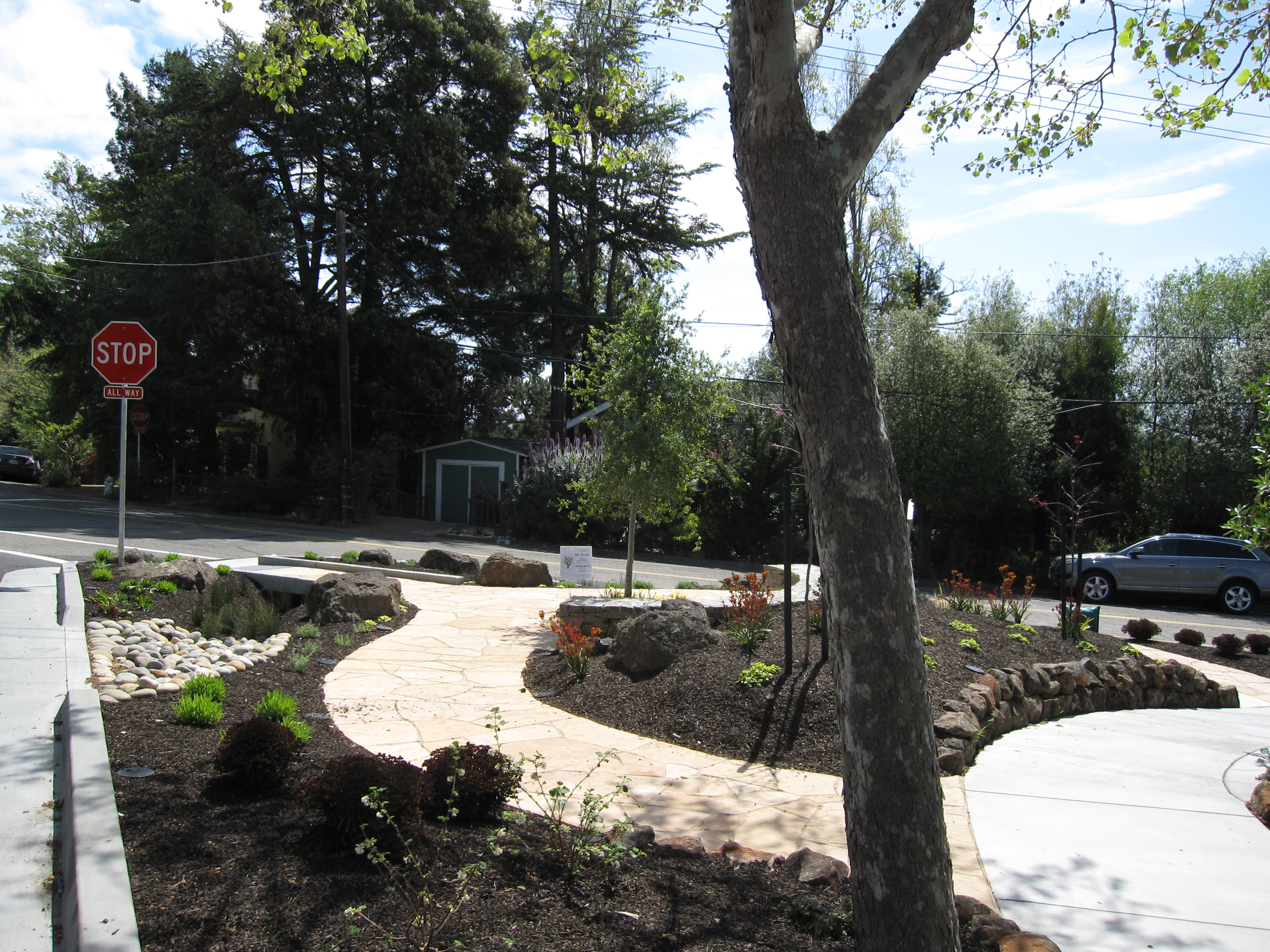
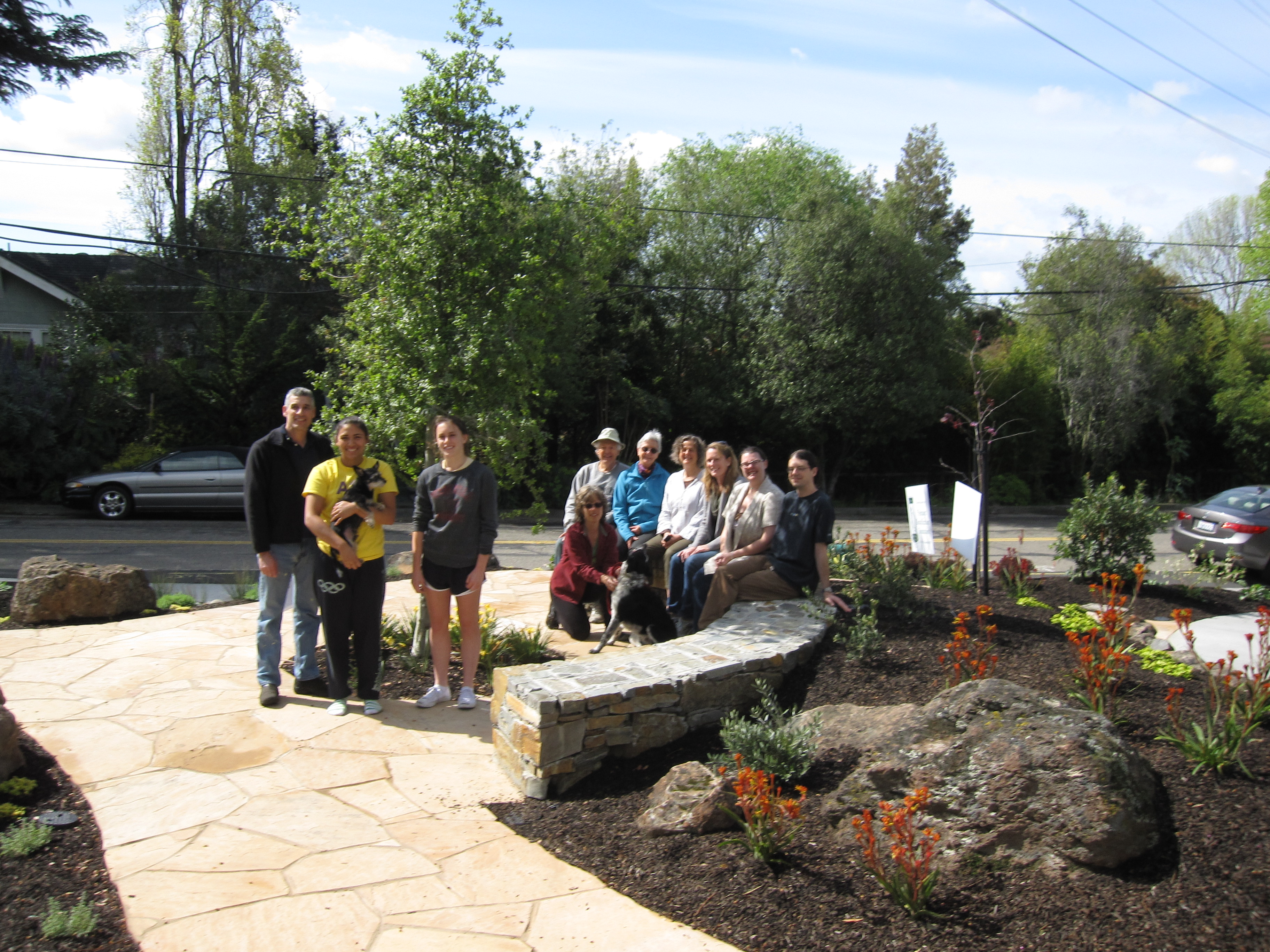
The triangular pedestrian parklet at the intersection of Ramona and Ronada Avenues will be dedicated on Thursday, April 10 from 5:00 p.m. to 7:00 p.m. in celebration of Arbor Day. The celebration, open to the public, will feature speakers, tables, food, drinks, and music.

Long triangular peninsula reduces width of one of City's biggest intersections

Long triangular peninsula reduces width of one of City’s biggest intersections

The project was initiated by Ramona and Ronada residents concerned about the safety of young children crossing the overly large intersection. Neighbors noted the lack of any crosswalks had been a problem for pedestrians and the excessive width attracted teenage daredevil teenage drivers, who spun their cars in “donuts”. Landscape architect Kimberly Moses developed a conceptual design that she and her neighbor Anne Marshall presented to the neighborhood and the Capital Improvements

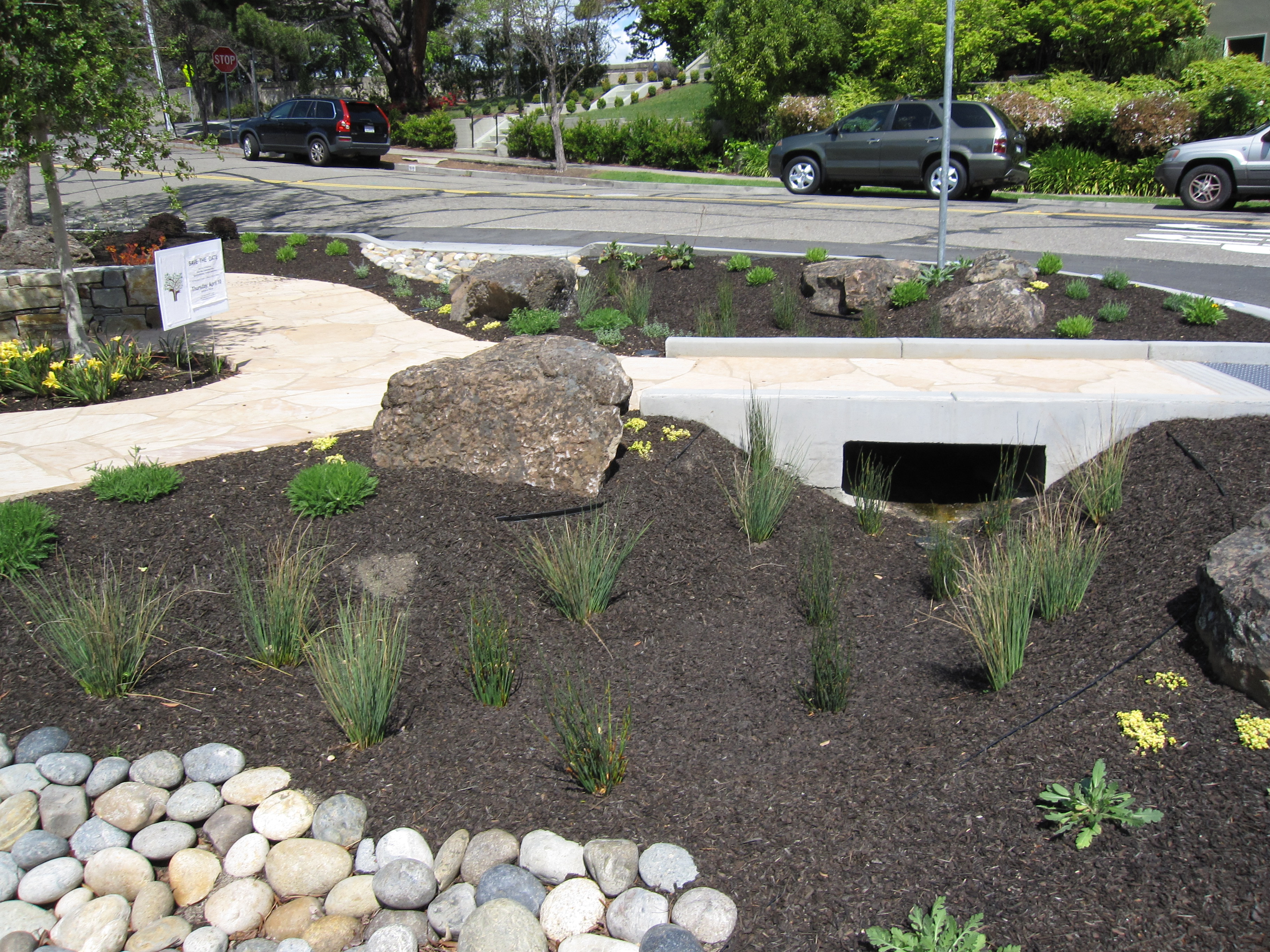
Flow-through rain garden design is low maintenance

Flow-through rain garden design is low maintenance

Projects (CIP) Committee. All the neighbors contributed to a garage sale at the homes of Hedi and Paul Gerken and Sherrie and Mark Arrabit that raised $1200 for the project. Neighbors presented the project to City staff, the Beautification Foundation and advocated it to the City Council.

Over the years of neighborhood advocacy, the Gerkins were ever vigilant. When Public Works staff arrived one day and started chalking an island in the middle of the intersection, Paul Gerkin  intercepted the crew and relocated them to paint the peninsula chosen by the neighborhood. It remained just a painted outline for several more years while City Councilmember Garrett Keating helped keep the project alive.

Finally, the project was funded, with $107,354 CIP Funds, $1200 from the Ramona and Ronada garage sale, and $30,000 from the Beautification Foundation for a total project budget of $138,554, including $10,000 project management and $11,687 (10%) contingency funds. Parks project manager Mark Feldkamp prepared the final park plan details for bidding.

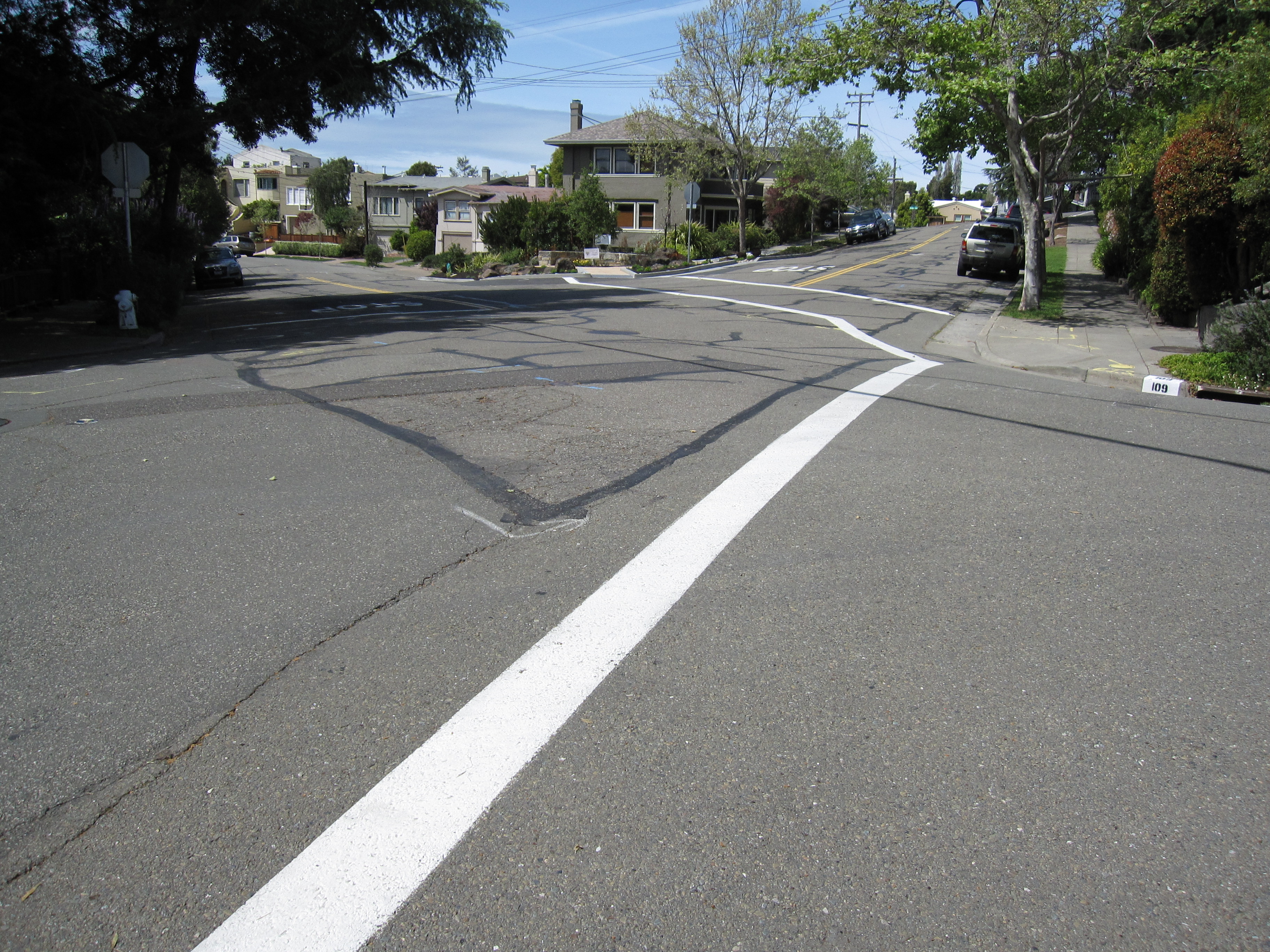
Crosswalks and new triangle help pedestrians cross the intersection

Crosswalks and new triangle help pedestrians cross the intersection

On April 30, 2013 three bids for the construction were received, ranging from $116,870 to $151,032. The low bidder, Cleary Brothers Landscape, Inc, was awarded the contract by the City Council on May 20, 2013.

On January 21, 2014 the Piedmont City Council noted that Cleary Brothers’ construction was completed under budget. The neighbors continued to play a central role. Marshall and Moses together with Parks Commissioner Nancy Kent accompanied Feldkamp on the visit to the nursery to select Mediterranean plants, appropriate for Moses’ flow-through rain garden concept. Chester Nakahara, Director of Public Works, told the Council that the intersection improvement had reduced traffic speeds improving pedestrian safety.

Neighbors  Mike Bott, Hedi and Paul Gerken, Anne Marshall, Jennifer Osgood, Jonathan Gerken, Kimberly Moses, Sherrie Jewett with Rue, Alisha Lewis with Rooney and Grace Sanford gathered in their parklet in advance of the dedication.

Hedi Gerken, Paul Gerken, Anne Marshall, Jonathan Gerken, Jennifer Osgood, Kimberly Moses, Sherrie Jewett & Rue, Alisha Lewis & Rooney, Grace Sanford

Mar 16 2014

Planning Commissioner David Hobstetter has resigned creating an additional opening on the Planning Commission, where there are now three vacancies to fill.  Applications for the vacancies on all of the City’s commissions and committees are due at City Hall, 120 Vista Avenue, on or before the deadline of Tuesday, March 25, 2014 at 5pm.

See full list of Piedmont committees and commissions.

Mar 7 2014

On Monday, March 10, 2014, the Piedmont Planning Commission will host a reception at 5 p.m. in the City Hall Courtyard, 120 Vista Avenue, in front of City Hall.  The reception honors Piedmont Design Award winners and their architects, engineers, contractors and neighbors.

The Design Awards Ceremony for projects completed in 2013 begins at  5:45 p.m. in the Council Chambers. This year, six Piedmont homeowners, along with their design and construction professionals will be recognized for the excellence in design of their projects.

Thomas W. Reese III  – 21 Pacific Avenue  – Excellent Garage

Bill and Carla Newell – 211 Lafayette – Excellent Garage remodel and Addition

Burr Nash and Lisa Rasmussen – 304 Pala Avenue – Excellent Seamless Expansion

Scott Cauchois and Karen Notsund – 320 Wildwood Avenue – Excellent Bay Friendly Landscape

John Lambert and Helen Potter – 104 Dracena Avenue – Excellent Minor Addition

Rajeev and Shiela Bhatia – 100 St. James Drive –  Excellent Upper Level Addition

“The Planning Commission selects the award recipients from the list of projects that received a final inspection following the completion of construction each year. The Commission typically acknowledges both large and small projects, and often something specific that was done very well, such as an addition that was so seamlessly designed and constructed, that it cannot be distinguished from the original construction. Consequently, the categories change a little each year, and the number of awards also varies.”  Kate Black, Piedmont City Planner

At 6:00 p.m. the regular Planning Commission Session will begin with a discussion and consideration of the February 24 workshop on the Bike and Pedestrian Plan.

The agenda also includes 10 planning proposals to be considered by the Commission.

Read the entire agenda.


Feb 22 2014

Attend the workshop in the Piedmont Community Hall (Piedmont’s Main Park), Monday, February 24, at 7:00 – 9:30 p.m.

Complete the walk/bike online survey to provide your input and for a chance to win one of three $50 gift cards for Mulberry’s Market (courtesy of the plan consultant):

http://www.surveymonkey.com/s/PiedmontWalkBike

 Walking and biking around Piedmont should be safer, easier and more convenient. To work toward that goal, the City is preparing its first Pedestrian and Bicycle Master Plan.

As part of that process, the City has developed a list of community-driven ideas to improve conditions for walking and biking. The ideas are based on almost 1,600 comments received from Piedmonters last fall on the needs of pedestrians and cyclists. Please click the following links below that describe these ideas:

The ideas include:

  • Physical, on-street projects (see Sections III and IV of the paper);
  • Activities and events (Section V); and
  • Changes to City policies and practices  (Section VI).

Your suggestions have been great, but there won’t be enough grant funding to accomplish everything within the lifetime of the walk/bike plan. We need your feedback to help us trim down the list. Also, some of the ideas entail policy trade-offs and competing objectives that we will need to resolve with your help.

Piedmonters have several opportunities to discuss and provide feedback on the ideas. Your input will be used to develop and prioritize final recommendations for the walk/bike plan:

  • A community workshop on Monday, February 24, 7:00–9:30 pm, at Piedmont Community Hall (711 Highland Avenue)
  • A Planning Commission hearing on Monday, March 10, at Piedmont City Hall (120 Vista Avenue)
  • An online survey at http://www.surveymonkey.com/s/PiedmontWalkBike. By completing the survey, you will be eligible to win a $50 gift card for Mulberry’s Market (courtesy of the plan consultant). There will be three winners!
  • Also, you can send your comments to Kate Black, City Planner, at kblack@ci.piedmont.ca.us or at: City Hall, 120 Vista Avenue, Piedmont, CA 94611

If you would like to stay up to date on the development of the plan, contact Janet Chang atjanetchang@ci.piedmont.ca.us or at (510) 420-3094 to be added to the email list for the project.

Get involved—these are your streets and sidewalks. Your voice is important!

The PBMP planning is being funded entirely through a grant from the Alameda County Transportation Commission (CTC; www.alamedactc.org) and through the City’s existing funds for pedestrian and bicycle improvements (pass-through Measure B funds), also distributed by the Alameda CTC.

Feb 22 2014

– Confusion Continues on Proposed New Property Tax Item of $9.55 Per Year Per Residential Unit for Hazardous Waste –

Questions continue to arise regarding the  $9.55 per year  for 10 years charge by the Alameda County Waste Management Authority (ACWMA,) imposed as  a new item on property tax statements.  The tax/ “fee” is be charged to residential properties per residential unit. However, detailed documentation states multiple residential units will only be charged only one unit fee as a single residential property. The justification is that multiple units in one building would generate no more hazardous waste than a single family home. The reasoning conflicts with the plan to tax each condominiums within one building on one parcel with the $9.55 fee.

Can property owners vote against the tax? Not even that is clear. According to the ACWMA, residential property owners may protest the charge by following directions on the protest card sent to all property owners.  Are protests tabulated and does the protest card represent a poll of respondents? 

The rational for the tax/fee is a loss of revenues arising from a reduction in waste going to the landfill and the concurrent weight-based dumping fee. Great efforts toward recycling have been successful, resulting in a major loss of funding from the landfill fees. 

The Alameda County Grand Jury has repeatedly charged the Alameda County Waste Management Authority (ACWMA) with creating an unnecessarily large agency.  Since the entire budget of the ACWMA is involved, information on current allocation of all resources might provide property owners with an informed decision on the necessity of the 10 year $9.55  tax per year fee.

The following information is on the City of Piedmont website:

ACWMA Considers Household Hazardous Waste Fee; Sends Benchmark Report

Piedmont has been informed that the Alameda County Waste Management Authority (ACWMA), will consider adopting a fee of $9.55 per year per residential unit, collected through the property tax roll, at a public hearing on March 26, 2014. Residents may also comment in person at either the February 26 ACWMA Board meeting or at the hearing on March 26. Both meetings will take place at 3:00 p.m. at 1537 Webster St., Oakland.

For more information on the proposed Hazardous Waste Fee as well as how you can file a protest of this fee, please see the Proposed Household Hazardous Waste Fee page of the ACWMA web site.

Separately, all Piedmont residences should have just received a Benchmark Service Report from ACWMA in the mail. According to ACWMA, “The report shows community by community data on the amount of garbage, recyclable and compostable materials found in residential garbage containers. It also shows countywide data on the amount of garbage, recyclable and compostable materials found in garbage containers for different types of businesses. The report also explains what you can do to reduce this waste.”

Since July 1, 2013, most residents have been paying an annual fee of $1.81 to ACWMA through their waste bill for this report. According to ACWMA, residents have until March 31, 2014 to opt out of this fee for future years. [Despite the inclusion of this statement in the Piedmont notice, it is unclear if Piedmonters are currently being charged this amount.]

For more information on this report, or for instructions on how to opt out of the fee, please see the Benchmark Service Page of the ACWMA web site.

Feb 7 2014

Piedmont’s Planning Commission will hold a study session hearing and discussion concerning the General Plan Housing Element Site Inventory on Monday, February 10, 2014 at 5:00 p.m. in the City Hall Council Chambers, 120 Vista Avenue, Piedmont, CA 94611. The Site Inventory is currently being drafted for Chapter 4 of the Housing Element and will be circulated later in February.

The Association of Bay Area Governments has decided Piedmont’s Required Housing Needs Allocation for 2015-2022 is 60 new housing units: 7 above moderate income; 15 moderate income; 14 low income; and 24 very low income. The City is not required to produce the 60 new housing units but only to provide circumstances that allow private developers to produce them.

The sites inventoried are: existing vacant lots; lots that can be created through subdivision; underutilized sites for multi-family housing; public land; and houses without second units.

The staff expects to submit an updated draft of the Housing Element to the California Department of Housing and Community Development in June 2014. During the summer and fall the staff would work with State reviewers  to revise the Housing Element and have it ready for City Council adoption by the end of the year. Bay area cities are required to adopt Housing Elements to cover the period 2015-2022 by January 31, 2015.

This study session is third in a series of sessions, and follows the introduction of the update to the Planning Commission on October 14, 2013, and a review of demographic changes and housing needs in Piedmont during the last decade on January 13, 2014.

Click to read the staff report for this item.

The public is invited to provide ideas on housing policy and suggest sites for new housing.

Jan 27 2014

New report shows residents and businesses of Alameda County what’s in their garbage and the economic value of properly sorting it.                                                                                                                  

Oakland, CA – January 20, 2014 –   Most of us say that recycling is important, but are we good at it? StopWaste spent the past year taking a look at garbage carts to find out. A report being mailed this week shows that residents and businesses in Alameda County dumped as much as $70 million of recyclable and compostable items in the garbage last year. The report is part of a new Benchmark Service from StopWaste, a public agency responsible for reducing waste in Alameda County.

“Let’s face it, we’re still burying too many valuable resources in landfills,” said Gary Wolff, P.E., Ph.D., StopWaste Executive Director. “More recycling would capture valuable resources already in our communities, stimulating the local economy and creating jobs.” Our goal for Alameda County is that by 2020, less than 10% of what’s in garbage containers will be recyclable or compostable. The Benchmark Service tracks progress towards that goal, and has three components:

  1. Random, anonymous measurements of how much garbage, recyclable and compostable material is in garbage containers in Alameda County
  2. Analysis of those measurements
  3. Reports sent directly to garbage service account holders describing what was found.

The first reports are now being sent to Alameda County residents and businesses. The data in the reports show how much garbage, recyclable and compostable material (as a percentage by weight) was in residential garbage containers, and some categories of business garbage containers, in 2013. On average, residential garbage carts in Alameda County contain 32% “good stuff” (recyclable and compostable material) by weight, an improvement from 60% in 2008. School garbage containers contain about 55% “good stuff.”

Consistent with the data collected in 2008, the biggest potential for improvement is with organics recycling. “If we could make just one change, it would be to recycle all our food scraps in the green bin, all the time” said Alameda County Waste Management Authority (StopWaste) Board President Don Biddle. “This would reduce greenhouse gases and help create compost that’s used to grow food and beautify urban landscapes.” For tips on how to recycle better, residents and businesses can visit www.StopWaste.org.

Jeff Becerra: (510) 891-6549jbecerra@stopwaste.org

Jan 19 2014

A Senate bill that would have outlawed strikes by BART‘s transit unions, as well as workers for CalTrans, and VTA, was defeated January 13, 2014 in the Senate Public Employees and Retirement Committee.  The vote was three against and two in favor, along party lines with Democrats opposing. Two Bay Area Democratic senators, Leland Yee, San Francisco, and Jim Beall, San Jose voted with the majority.  This means the bill will not be taken up on the floor of the State Senate, unless reintroduced before the February deadline.

Last month, the BART Board of Directors discussed the need for a ban and the possibility of developing an alternate ban. However, neither BART management nor BART riders attended the Senate committee meeting. The Service Employees International Union and Amalgamated Transit Union did attend and testify against the bill.

Read PCA previous coverage of the proposed bill.

Read more: http://www.pleasantonweekly.com/news/2014/01/16/legislators-kill-bart-strike-ban-proposal

http://sanfrancisco.cbslocal.com/2014/01/13/phil-matier-california-lawmakers-kill-proposal-to-ban-transit-strikes/

Jan 9 2014

Cost overruns, unidentified risks, legal and engineering oversight are addressed in the finally adopted Risk Assessment Policy.

Following Piedmont’s unplanned expenditure of well over 3 million tax payer dollars, a result of the  failed Blair Park/Moraga Canyon sports complex project and faulty private underground utility project, residents and groups such as the Piedmont League of Voters (LWV) were concerned and offered suggestions on how to protect Piedmont from future unplanned financial impacts.  The City Council finally unanimously approved a Risk Assessment Policy.

Risk problems centered on the lack of step-by-step monitoring and reporting of risks and costs.  The new policy lays out actions to alert the Council, the public and the staff when capital projects costing over $300,000 are considered, approved and implemented. Public knowledge early in project development was specifically requested by the LWV and others.

The policy is intended to provide a thorough review of projects prior to expending large amounts of City time and money on projects without public knowledge and involvement.

Rob Hendrickson, a construction law attorney and civil engineer who served on the LWV’s Task Force on Civic Governance, repeated the monthly accounting recommendation presented in April, 2013 by then LWV President Julie McDonald.  He urged that as a project was being implemented a monthly accounting should be presented to the Council to assure staff was monitoring the project and the public was aware of problems.  This request was echoed by High School student Julie Adams, who felt this was common in business and should be a part of the policy.

Tim Rood, candidate for City Council, agreed with the accountability measures noted in the LWV communication.

Acting City Attorney Michelle Kenyon cautioned against including specific timelines for the City Administrator, such as monthly reporting, as this could result in further risk if the timeline was not met. Council member  Jeff Wieler stated the responsibility for compliance rested with the City Administrator as part of the job description and non-compliance would be dealt with through personnel evaluations and ultimately through the  Council election process.

Public Works Director Chester Nakahara who was responsible for drafting and redrafting the much belabored policy responded to concerns. Numerous “and/or” clauses in the policy language were at issue as to when and what would be presented to the public and Council during the conceptual and implementation phase of a project.  Nakahara pointed out that the requirement that the City Attorney and City Engineers review projects would be an expense for the City.

Excerpts from the City Charter:

The City Administrator, “Shall keep the Council fully advised as to the financial condition and future needs of the City…”

The City Attorney is to “Represent and advise the Council and all City officers in all matters of law pertaining to their offices;” “Approve the form of all contracts made by and all bonds given to the City, endorsing approval thereon in writing;” “All contracts shall be drawn under the supervision of the city attorney.”

The City Engineer description states, “There shall be a city engineer who shall have supervision over all matters of an engineering character as required by State law, or as assigned by the City Council.”

Council member Garrett Keating supported contract review by the City Attorney to protect the City from risks on public and private projects.

Review by the City Engineer is intended to make certain all projects are properly engineered and contracts are appropriately specified.

Consultants employed to oversee or advise on projects would be an additional cost of any project.

City Administrator Geoff Grote, who is retiring within weeks, stated that the policy would not prevent all future problems, while acknowledging the policy would be helpful and could be modified as needed in the future.

Mayor John Chiang was repeatedly thanked for bringing the policy to the Council for approval prior to his February retirement from the Council.

Click for the staff report and communications.

Click for draft minutes to view changes approved by the Council.